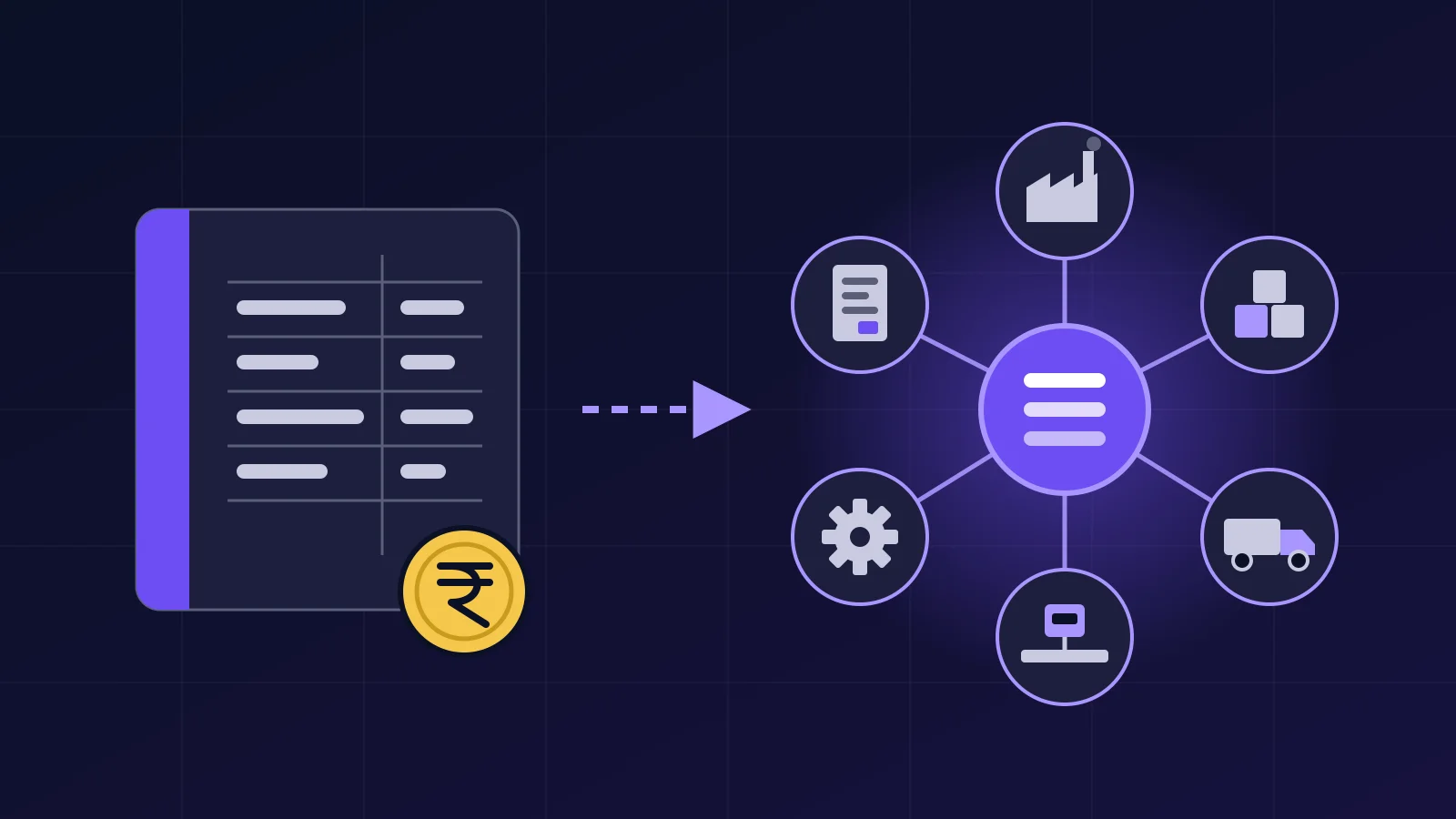



Most failed ERP implementations don't fail because of the software. They fail because of the sequence: data that was never cleaned up, modules launched all at once, and a go-live date picked before anyone checked whether the team was actually ready. Here's the order that keeps a rollout from turning into a six-month headache.
Before You Pick a Vendor
Map how your process actually runs today, including the spreadsheets, the registers, and the workaround everyone quietly relies on. Digitising a broken process just makes the mess move faster. The point of implementation isn't to copy your current workflow into software; it's to fix what's actually costing you time first. For the questions to settle before you sign, such as data ownership, GST and multi-plant needs, use our pre-signing ERP checklist.
Data Cleanup Comes First
- Deduplicate SKUs and vendor records before migration. Importing three versions of the same supplier's name just moves the mess into the new system.
- Reconcile opening stock and financial balances against physical reality, not last year's spreadsheet total.
- Decide what history actually needs to migrate versus what can stay archived in the old system for reference.
Sequence Modules, Don't Big-Bang It
Launching finance, inventory, production and HR simultaneously multiplies the number of things that can go wrong on day one, and makes it hard to tell which module actually broke when something does. Most successful rollouts start with whichever module is causing the most pain today (usually inventory or finance). They prove it against real operating data, then extend module by module.
Get the Go-Live Plan Right
- A defined parallel-run period: running the old and new systems side by side long enough to catch discrepancies before the old one gets switched off.
- A real training schedule for the people who'll actually use it daily, not just a one-time walkthrough for management.
- Explicit go-live criteria: what has to be true before you flip the switch, agreed in advance rather than decided under deadline pressure.
- A rollback plan for the first two weeks, in case something that looked fine in testing doesn't hold up against real volume.
Know the Real Cost Before You Start
Implementation cost isn't just the software subscription. It's the staff time, the data cleanup, and the training. Before you commit to a rollout, it's worth running the numbers on what the current spreadsheet-and-manual-process setup is actually costing you against what an ERP system would save. Our CFO's guide to ERP payback shows which savings and costs to count.
Planning a rollout?
See how ZapNexa's staged implementation approach works for manufacturers.
Explore ZapNexa