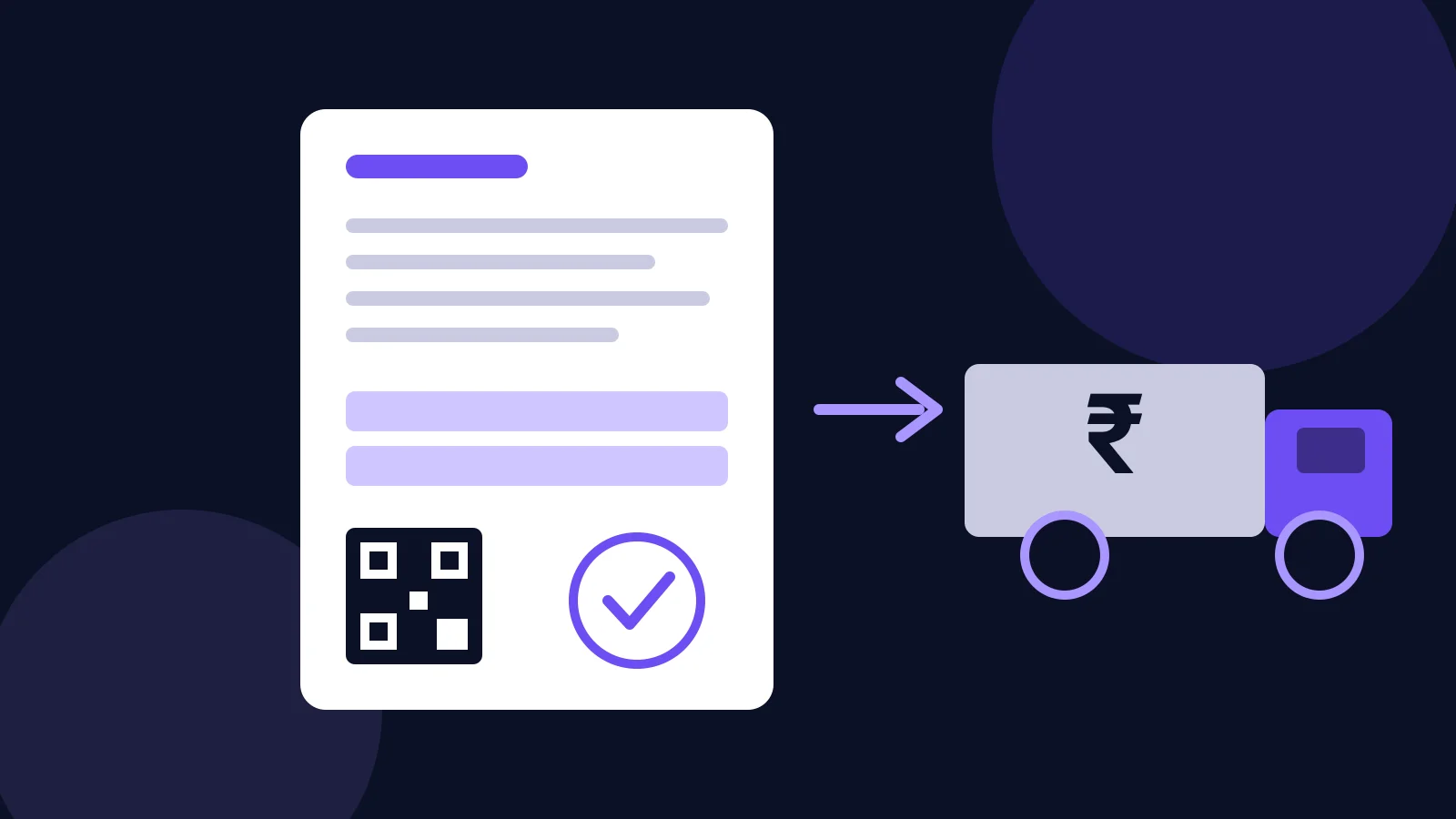
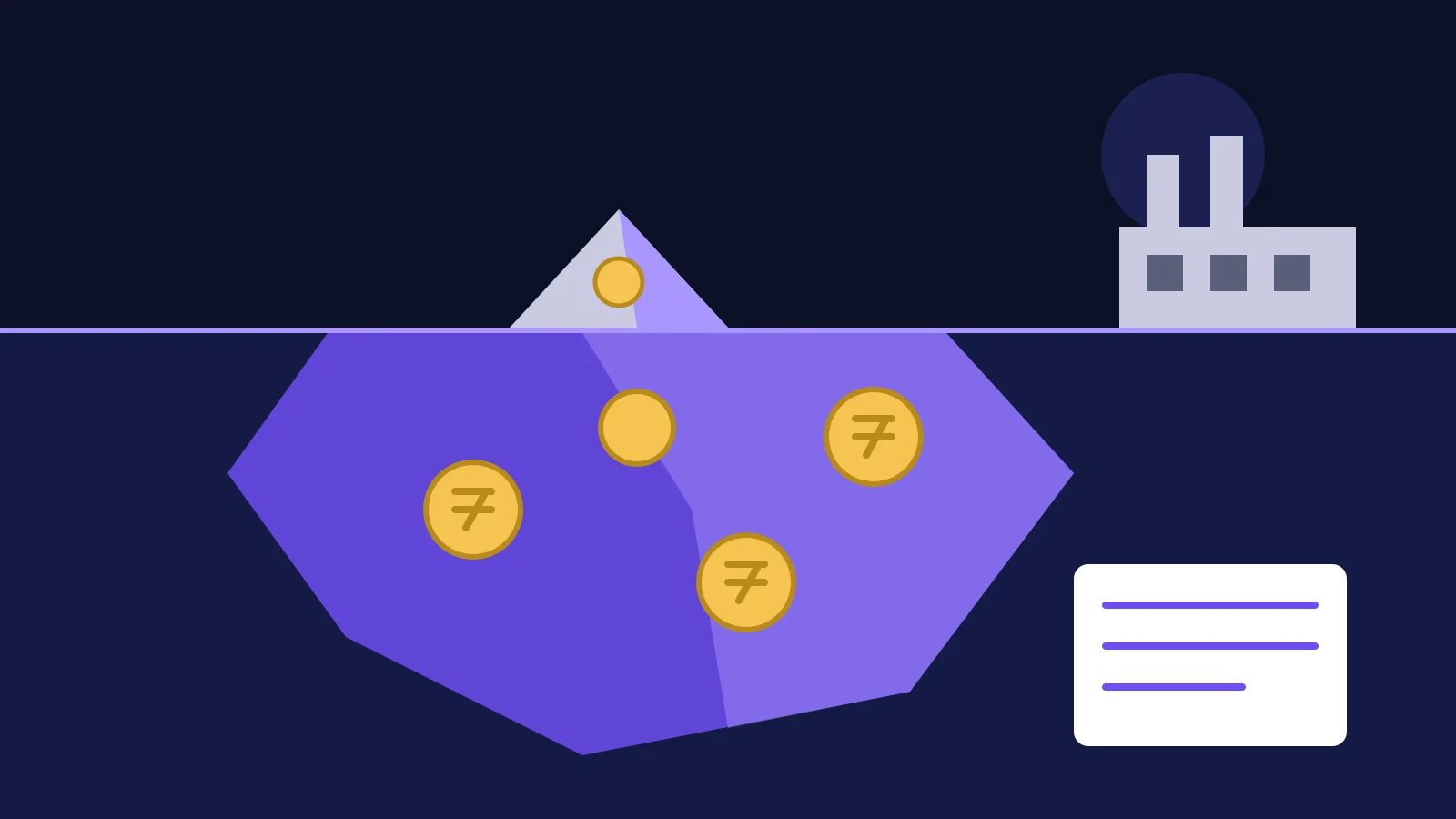
ERP software cost in India has seven parts: licence or subscription, implementation, data migration, training, customisation, hardware and yearly support. The licence is often the smallest slice of a three-year bill. In the illustrative example below, a 60-user plant spends ₹63.8 lakh over three years, and the licence is ₹20 lakh of it.
Most price pages show one number. That number hides the rest. This post lists every cost line, shows a rupee example you can copy, and gives you a way to compare quotes that do not look alike. We do not quote any vendor's price here. Public prices for named products change often and rarely match a real plant.
What cost lines are in an ERP quote?
A full ERP quote has seven lines, and a good vendor shows all of them. If a quote shows fewer, ask where the missing ones are. Use this table as the checklist.
| Cost line | What it pays for | Where it hides |
|---|---|---|
| Licence or subscription | The right to use the software, by user, module or plant | A low "starting price" that covers one module |
| Implementation | Set-up, master data, workflows, GST set-up, go-live help | Quoted in days, with no end date |
| Data migration | Moving items, parties, opening stock and balances | Treated as "your job" |
| Training | Teaching every shift, not just the key users | One session for ten people |
| Customisation | Reports, forms, approvals and integrations you need | Priced per change request later |
| Hardware | Servers, backup, network, or nothing if hosted | Missing from software-only quotes |
| Yearly support | Fixes, updates, help desk, often called AMC | A percentage that rises each year |
Add a contingency line of your own. Projects find extra work.
Which cost drivers move the number most?
Five things move the total: the number of users, the number of modules, the number of plants, the deployment type and the amount of customisation. Everything else is smaller.
- Users. Named users and concurrent users are priced differently. Ask which one the quote uses. Count the stores clerk and the weighbridge operator, not just managers.
- Modules. Finance alone is cheaper than finance plus production, stores, purchase and payroll. A phased start keeps the first bill small. Our ERP implementation checklist shows how to choose the first module.
- Plants. A second plant adds master data, user training and reporting rules. See our guide to multi-plant ERP for what changes.
- Deployment. Your own servers cost more up front. Hosted subscriptions cost less up front and more each year.
- Customisation. Each custom screen needs testing again after every update. Fewer changes mean a cheaper project and an easier upgrade.
A worked ₹ example: 60 users, one plant, three years
The figures below are illustrative. They are not a customer result and not any vendor's price. They are set to look realistic for a mid-sized plant, so replace them with the numbers from your own quotes.
Assume 60 users, one plant and the same scope in both cases. In option A you buy a perpetual licence and run it on your own server. In option B you pay a monthly subscription per user and the vendor hosts it.
| Line (₹ lakh) | A: perpetual licence | B: subscription |
|---|---|---|
| Licence or subscription, 3 years | 20.0 | 54.0 |
| Implementation | 12.0 | 12.0 |
| Data migration | 3.0 | 3.0 |
| Training | 2.0 | 2.0 |
| Customisation | 4.0 | 4.0 |
| Server and backup, or network and backup | 6.0 | 1.0 |
| Support contract, 3 years | 10.8 | included |
| Your own staff time | 6.0 | 6.0 |
| Total, 3 years | 63.8 | 82.0 |
Here is how the numbers were made:
- Option A support is 18% of the ₹20 lakh licence each year: ₹3.6 lakh × 3 = ₹10.8 lakh. The 18% is an assumption for this example.
- Option B costs ₹2,500 per user per month: 60 × 12 × 2,500 = ₹18 lakh a year, so ₹54 lakh over three years.
- Staff time is a project lead and two key users for about nine months, valued at ₹6 lakh.
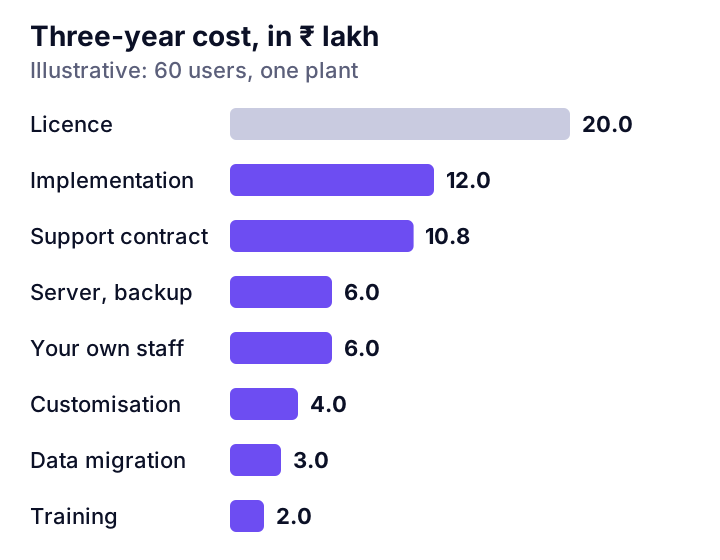
The licence is ₹20 lakh of ₹63.8 lakh, about 31%. Implementation, support and hardware together are more than the licence.
Does the answer change after one year?
Yes. In year one, option A costs ₹56.6 lakh and option B costs ₹46.0 lakh, so the subscription wins. By year three, option A costs ₹63.8 lakh and option B costs ₹82.0 lakh, so the licence wins. The break-even falls between year one and year three, and it moves with your user count.
So ask for the three-year number, and a five-year number if you plan to keep the system that long. A year-one comparison favours subscriptions every time.
How do you compare quotes that look different?
Put every quote into the same table, with the same scope and the same three-year view. Then fix the gaps by asking questions.
- Which users does the price count: named, concurrent or by role?
- Which modules and how many plants are in scope?
- Is data migration included? How many master records?
- How many training days, and for which shifts?
- What does a change request cost after go-live?
- What is the support fee in year one, two and three? Does it rise?
- Does the price include GST, or is it added on top? Check the tax treatment with your CA.
- Who owns the data, and can you export it in a usable format?
- What happens to the price when you add a plant or ten users?
- Is the e-invoicing and e-way bill connection included? Our GST e-invoicing checklist lists what to test.
Write the answers next to each quote. A vendor who dodges question 6 or question 9 is telling you something.
Where does this cost view go wrong?
Cost is half the decision. The other half is what you get back.
- Cheapest quote, wrong fit. A system that cannot do your production costing or weighbridge entries will need heavy customisation. That costs more than the licence you saved.
- Free software is not free. Open-source ERP has no licence fee. You still pay for implementation, hosting, support and the skills to run it.
- Scope creep. Every "small" extra report adds days. Freeze the scope and keep a list for phase two.
- Ignoring your own time. Your key users will spend months on testing and data checks. Plan their time, or the go-live slips.
- Cost without benefit. A lower bill with no plan for results is not a saving. Pair this post with our CFO guide to ERP ROI to count the return, and read build vs buy ERP if a custom build is on the table.
If you are leaving Tally or spreadsheets, the move itself has a cost. Our ERP migration checklist for Indian manufacturers shows the data steps to budget for.
How does ZapNexa price its ERP?
ZapNexa is quoted per configuration, not from a fixed price list. The price depends on your modules, plants and users. We give you a number for your set-up after we understand your plant. We do not publish a list price, so we do not show one here.
ZapNexa covers production, inventory, purchase, finance with GST-ready invoicing, HR and payroll. It runs on your own servers or on cloud infrastructure you control. Many plants start with one module and add the rest later, which keeps the first bill small. Read the ZapNexa ERP page for the module list, and use the ERP ROI calculator to estimate payback before you talk to anyone.
Frequently asked questions
How much does ERP software cost in India for a manufacturer?
There is no honest single price. The cost depends on users, modules, plants, deployment type and how much you customise. Most of the bill is not the licence. Implementation, data migration, training, hardware and yearly support add to it. Ask each vendor for a line-item quote for three years, then compare the totals, not the licence price.
Why do ERP quotes for the same plant differ so much?
Vendors count different things. One quote may include data migration, training and a year of support. Another may show only the licence. Pricing models also differ: per user, per module, per plant or a flat fee. Put every quote into the same cost table before you compare them.
Is a cloud ERP subscription cheaper than a perpetual licence?
It is cheaper in year one and often dearer by year three. A subscription spreads the cost, and you need no server. A perpetual licence costs more up front but adds only a support fee later. In the worked example below, subscription wins at one year and loses at three. Your numbers decide it.
What are the hidden costs of an ERP project?
The usual ones are your own staff time, data cleaning before migration, extra reports and integrations, weighbridge or machine connections, training for second and third shifts, and extra users added later. Add a contingency line to the budget. Treat it as a planned cost, not a surprise.
Estimate the payback first
Enter your own plant figures in the ERP ROI calculator, then ask for a line-item quote and compare it with the cost table in this post.
ERP ROI calculatorExplore ZapNexa ERP