

An AI fire and smoke detection camera reads your CCTV video and alerts when it sees smoke or flame. It helps most in tall sheds and open yards, where smoke may never reach a ceiling detector. It does not replace your fire alarm. Above a 10 m ceiling, IS 2189:2008 allows only beam or aspirating smoke detection.
Vendor pages sell this with speed and accuracy figures from their own tests. This guide stays with what a plant or warehouse head can check. It covers where cameras add cover, what the Indian code still asks for, why these systems false alarm, and how to test one for a week. If you are not sure your cameras can run AI at all, start with our readiness check for existing CCTV.
How does an AI fire and smoke detection camera work?
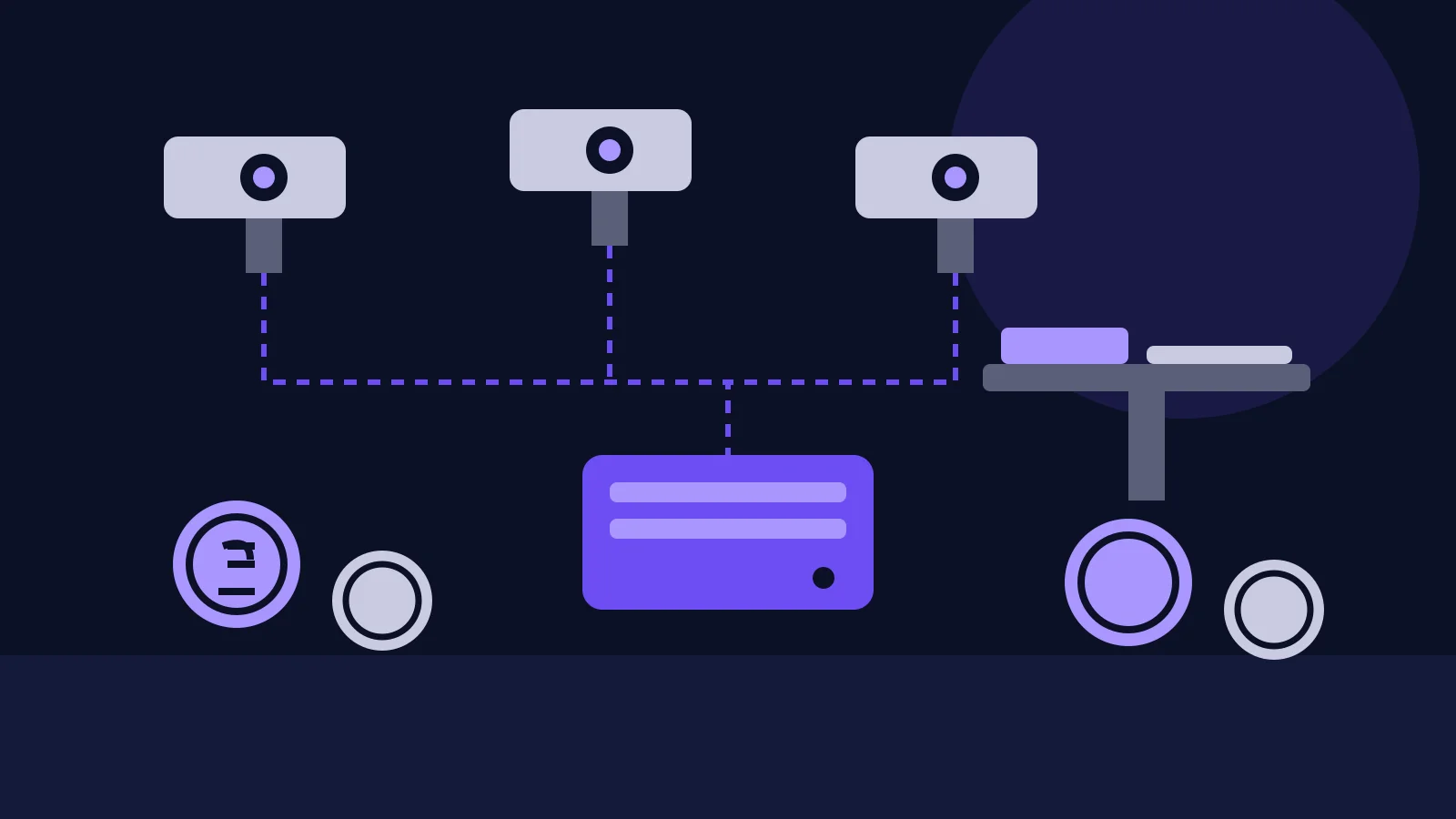
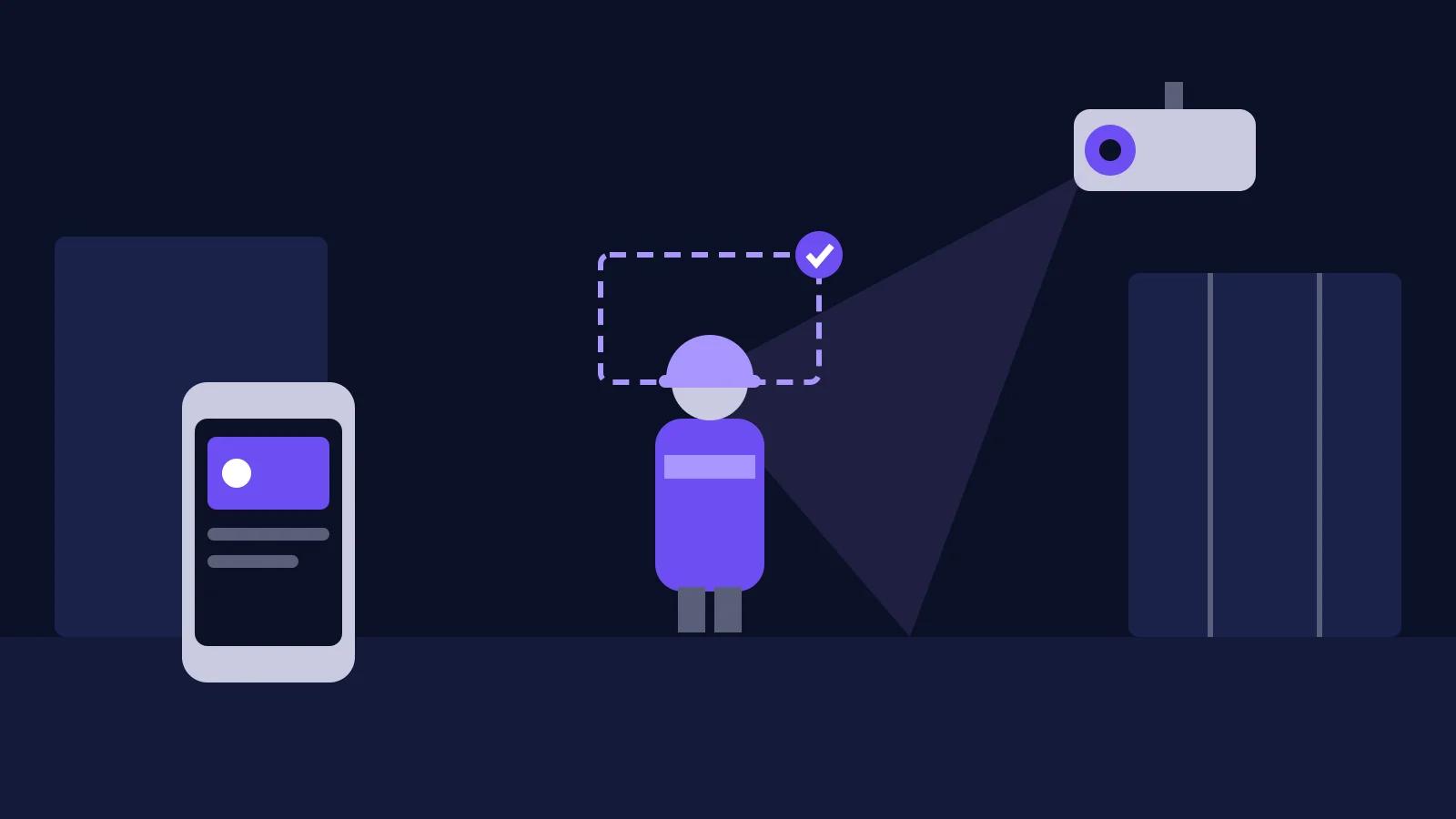
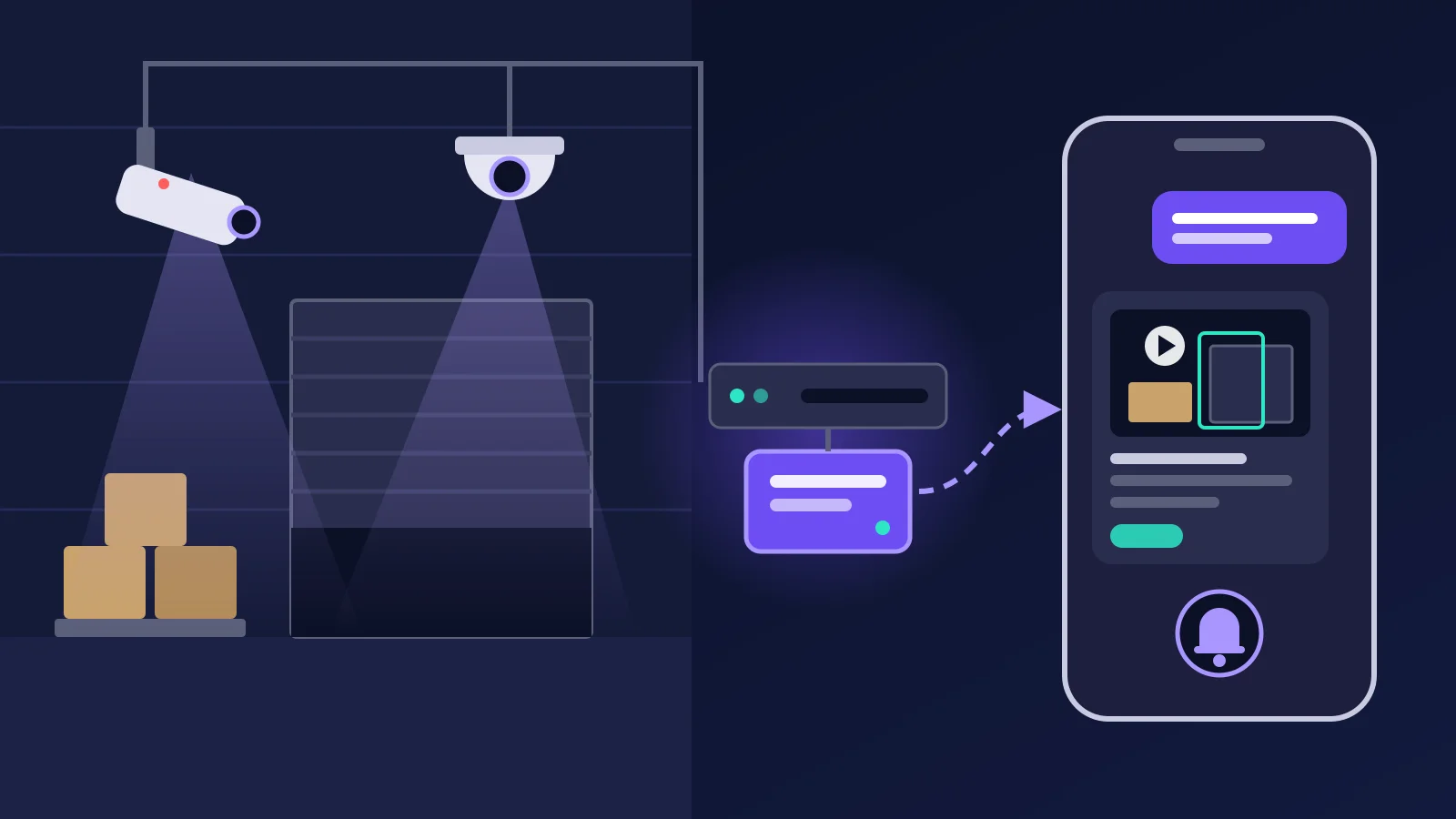
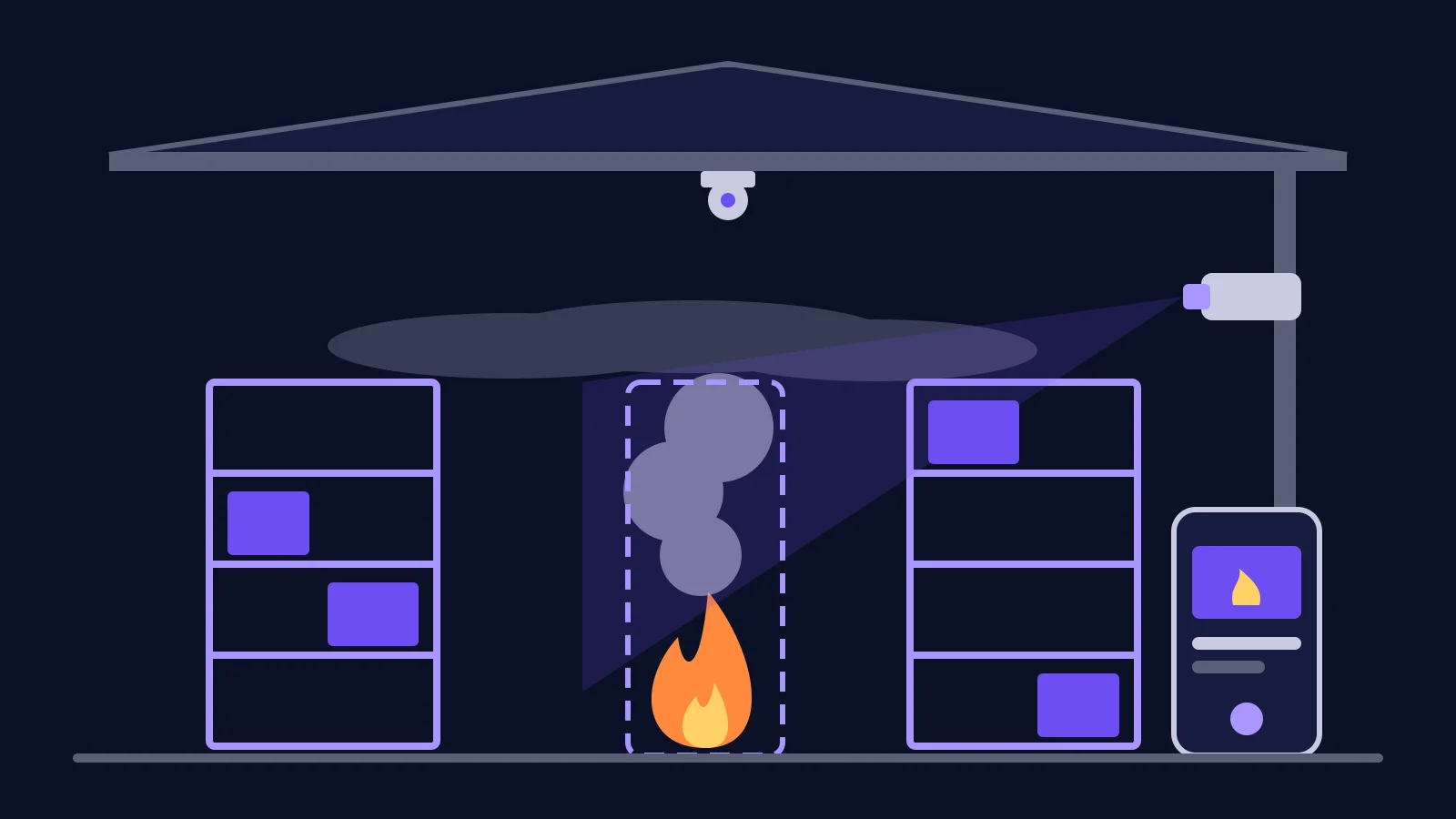
Software looks at each video frame for the shape and drift of smoke, or the colour and flicker of flame. When the pattern holds for a few seconds, it sends an alert with a short clip. Most systems read the RTSP stream your camera or recorder already gives, so the camera itself stays.
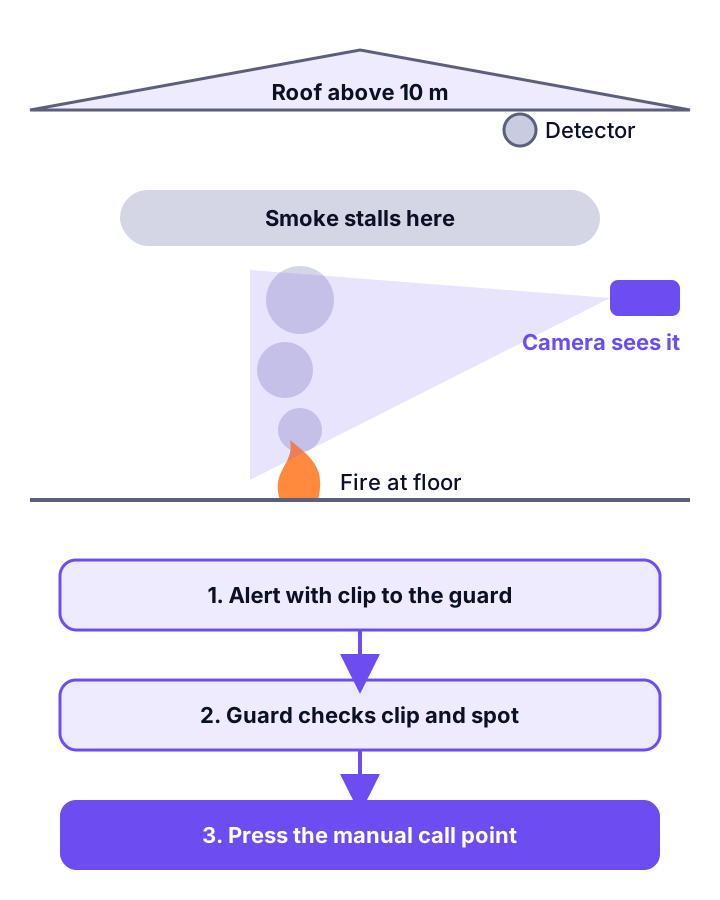
The big difference from a ceiling detector is where the detection happens. A point smoke detector waits for smoke to travel to it. A camera sees smoke anywhere in its picture, as long as the view is clear and there is enough light.
That also sets its limit. A camera sees only what it points at. A fire behind a rack, inside a panel or above a false ceiling stays hidden until smoke comes into view.
Where does fire detection using CCTV help most?
Where smoke is slow to reach a ceiling detector, or where there is no ceiling at all. IS 2189 names the problem itself. In tall spaces the hot gases cool on the way up, and with stratification "smoke does not rise to the ceiling at all".
| Area | Why ceiling detectors struggle | What a camera adds | Watch out for |
|---|---|---|---|
| High-bay warehouse, racks over 10 m | Smoke cools and stalls below the roof | Sees the plume at rack level | Racks block the view; stock moves daily |
| Open yard: scrap, coal, biomass, cotton bales | No ceiling to mount on | Covers a wide area from one pole | Dust, sun, fog and distance |
| Loading bays and open sheds | Wind and open shutters carry smoke away | Sees smoke before it blows out | Truck exhaust, headlights |
| Stores with cartons and packing | Fire grows inside stacks | Early warning at the stack face | Cannot see inside a stack |
Rooms with a normal ceiling are a poor fit. In a DG room, panel room or server room, spot detectors already work well, and a camera adds little. Video smoke detection pays off in warehouses, like the logistics sites that run tall racking, and in open storage.
What does IS 2189 still require?
Your detectors, panel and manual call points all stay. IS 2189:2008 is the Indian code of practice for automatic fire detection and alarm systems. It covers heat, smoke, flame, beam and aspirating detectors, and sets their spacing by ceiling height. A CCTV camera running AI is not one of the detector types it covers.
The spacing rules for a flat ceiling with no forced air (clauses 6.3.2 and 6.3.3 of the 2008 edition):
| Ceiling height | Smoke detectors | Heat detectors |
|---|---|---|
| Up to 5 m | 7.5 m apart | 5.3 m apart |
| 5 m to 7 m | 7.5 m apart | 3.5 m apart |
| 7 m to 10 m | 5 m apart | Not allowed |
| Above 10 m | Only beam or aspirating detection | Not allowed |
Three points follow for any camera project:
- Treat the camera as an extra layer. Do not count it toward the detectors your approval needs.
- Never let a camera alert start suppression. Do not use it to trigger sprinklers, gas release or a plant trip. IS 2189 says automatic extinction should generally start only after two detecting signals confirm the fire.
- Send the alert to a person. That person checks the clip, walks to the spot and presses a manual call point if needed.
The 2008 edition is the copy freely available online. Ask your fire consultant which edition and which state fire rules your building approval used. This section summarises the standard's text. It is not fire engineering advice.
Why do AI fire cameras give false alarms?
Because many normal things in a plant look like smoke or flame on video. A 2025 paper on vision-based fire and smoke detection in industrial settings names steam, fog, welding sparks and reflections as the main mix-ups. It also says many such methods reach good detection rates "at the expense of excessive false alarms".
Here is how that list looks on an Indian plant floor:
- Welding and gas cutting bays. Sparks and arc light look like flame.
- Furnace mouths, kilns and ladles. Hot metal glows orange all shift.
- Steam. Boiler vents, cooling towers, quench tanks and wash areas.
- Dust. Loading cement, coal, flour or fly ash throws up a grey cloud.
- Exhaust. Diesel forklifts and trucks at the dock.
- Light. Evening sun, orange sodium lamps, flashing beacons and headlights.
- Monsoon. Fog, rain drops on the lens, and insects in front of the infrared light at night.
Night needs its own check. Most CCTV cameras switch to infrared after dark and give a grey picture. Flame colour is lost, and thin smoke is hard to see against a dark roof. Pull a 2 am clip from each camera before you trust it at night.
The fix is the same as for any camera rule. Mask the areas that glow or steam for normal reasons. Ask the event to hold for several seconds. Let a second check look at the frames before anyone gets an alert. Our guide to PPE detection on factory CCTV explains these rule settings in more detail.
How do you test camera fire detection on your site?
Run it silent for one week, then do a supervised smoke test. Decide who acts on each alert before you switch alerts on.
- List the weak spots. Walk the site with your fire alarm layout. Mark areas over 10 m high, open yards and tall stacks.
- Check what each camera sees. Smoke rises, so the frame needs space above the likely fire point. A camera that shows only the floor sees smoke late.
- Count pixels. Our own example: a 1080p camera covering a 30 m wide yard gives about 64 pixels per metre. A 0.5 m puff of smoke is then about 32 pixels across. A closer view catches a smaller fire.
- Mask normal hot spots. Welding bays, furnace mouths, chimneys and steam vents.
- Run one week with alerts off. Log every alert the system would have sent, and mark each one real or false.
- Do a supervised smoke test. Ask your fire alarm contractor for a safe visible smoke test in view of the camera. Note whether it alerted, and after how many seconds. Never light a fire to test it.
- Write the response. Name who gets the alert on each shift, what they check in the clip, and when they press the call point.
- Review every week. Fix or drop rules that keep false alarming. A camera that sends ten wrong alerts a night will be muted.
A test sheet keeps the week honest. These sample rows are illustrative, not from a real site:
| Date and time | Camera | Alert sent? | Real or false | Cause | Action |
|---|---|---|---|---|---|
| Mon 14:10 | Yard pole 2 | Yes | False | Truck exhaust at the gate | Mask the gate lane |
| Tue 02:30 | Rack aisle 4 | No | Missed smoke test | Infrared picture too dark | Add a light or move the camera |
| Thu 11:45 | Welding bay | Yes | False | Arc light | Mask the bay |
| Sat 16:20 | Bale yard | Yes | Real (smoke test) | Supervised test | None |
If the extra cover looks worth it, our AI CCTV analytics cost guide shows how to compare quotes per camera over three years.
Where does camera fire detection go wrong?
Mostly where people expect it to do a fire alarm's job. Keep these limits in view.
- Line of sight. Stock piled in front of a camera this week blocks a view that worked last week.
- Hidden starts. A fire can begin inside a panel, cable tray or duct. IS 2189 asks for detectors in cable tunnels, ducts, false floors and distribution boards. A camera cannot look inside them.
- Silent failure. The IS 2189 foreword asks a fire alarm system to supervise its own faults. A camera stream, site PC or network switch can fail quietly. Set an alert for a camera that goes offline, is covered or is moved, and put the PC on a UPS.
- Vendor numbers. Detection times and accuracy on vendor pages come from their own tests. Ask whose footage, at what distance, by day or by night.
- False comfort. The worst result is a site that skips detector upkeep because "the cameras watch now". Keep your fire contractor's test schedule.
Where Camryx fits
Camryx is our AI for the CCTV a business already has, and it is in early access. Smoke or fire is one of the alert rules you can write in plain words for chosen cameras and hours. A vision model checks each alert before it is sent, and the alert reaches WhatsApp, Telegram or email with the clip. Marking alerts "Useful" or "False alarm" tunes them. It can also alert when a camera is covered or moved. Like any camera system, it is not a fire detector under IS 2189. Use it as an early warning for a person to check. We have no site accuracy figures to share yet. See how Camryx works with your cameras.
Frequently asked questions
Can a normal CCTV camera detect fire and smoke?
Often, yes, with AI software reading its video stream. It can flag smoke or flame that is visible in the picture. It cannot see a fire behind a rack or inside a panel, and infrared night footage makes thin smoke hard to see. Test each camera by day and by night before you rely on it.
Can an AI camera replace smoke detectors?
No. IS 2189:2008 sets the type and spacing of fire detectors by ceiling height, and a CCTV camera is not one of the detector types it covers. Keep the detectors, panel and manual call points your approval needs. Use the camera as an extra early warning where ceiling detectors are weak, such as tall racks and open yards.
What is the smoke detector spacing for high ceilings in India?
Under IS 2189:2008, on a flat ceiling with no forced air, smoke detectors are 7.5 m apart up to 7 m height and 5 m apart from 7 to 10 m. Above 10 m, only beam or aspirating smoke detection is allowed. Ask your fire consultant which edition and state rules your approval used.
Does AI fire detection work at night?
Less well. Most CCTV cameras switch to infrared after dark and give a grey picture. Flame colour is lost and thin smoke is hard to see against a dark background. Pull a night clip from each camera and run a supervised smoke test after dark before you count on it.
How fast does an AI camera detect fire?
We found no independent test on Indian sites, so we do not quote a speed. The figures on vendor pages come from their own tests. Time it yourself: in a supervised smoke test, note the seconds from first visible smoke to the alert on the phone.
Add a smoke and fire rule to the cameras you have
Camryx reads the CCTV, DVR or NVR you already own and checks alert rules written in plain words. Now in early access.