

A general chatbot can tell you what a centrifugal pump is. It can't tell you the torque spec for the coupling bolts on your pump, or which SOP covers restarting it after a trip. An engineering assistant LLM is built for the second kind of question: it answers from your own manuals, procedures and maintenance history, and shows you where the answer came from. That grounding is the whole difference.
The Problem It Solves
Most plants sit on decades of documentation (equipment manuals, standard operating procedures, safety standards, maintenance logs) scattered across binders, shared drives and a few people's heads. The information exists. Finding the right paragraph at the moment you need it, standing at the machine, is the hard part.
- A technician loses twenty minutes walking back to the office to find a manual, or just guesses.
- The one engineer who knows the old line's quirks retires, and the knowledge leaves with them.
- A document-grounded assistant gives a sourced answer in seconds, from the same documents that were always the authority.
What "Grounded" Actually Means
The key architectural point, and the reason a general model isn't enough, is that an engineering assistant only answers from the knowledge base you connect. It doesn't improvise from the open internet.
- Answers are drawn from your manuals, SOPs, standards and records, not generic web content.
- Every answer cites the document and section behind it, so an engineer can verify it before acting.
- It understands how technicians phrase questions, not just the exact wording buried in a PDF.
What It Doesn't Do
Being honest about the boundary is what keeps this useful rather than dangerous:
- It doesn't replace an engineer's judgment. It surfaces the reference faster, but the human still decides.
- It doesn't invent a procedure that isn't in your documents. If the answer isn't there, it should say so, not guess.
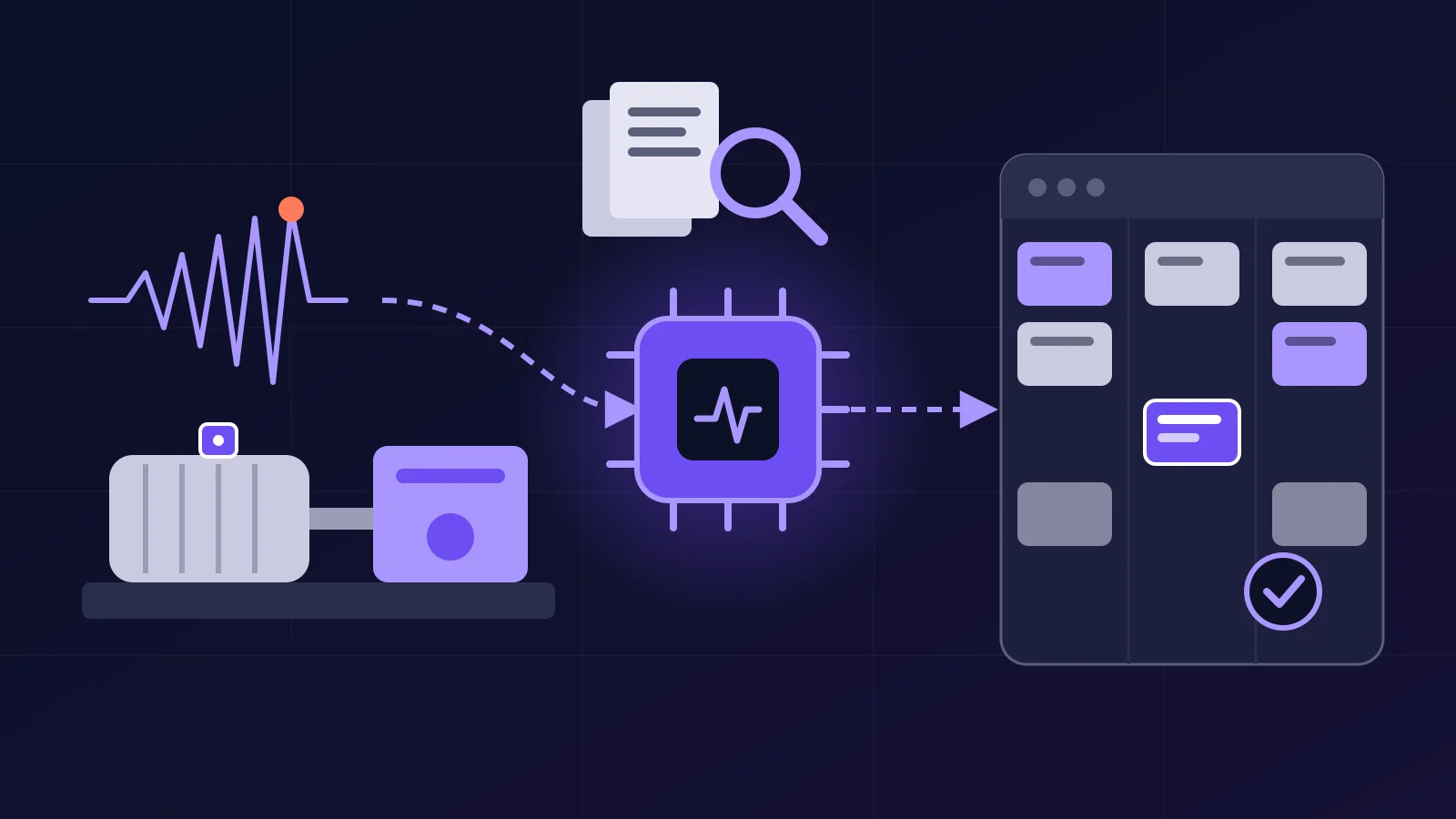
- It isn't a condition-monitoring model. Reading live machine signals is a different job, and that's what the VMI models do.
Where It Earns Its Place
The clearest wins are the everyday ones:
- On-the-floor support: a spec or procedure answer at the machine, without leaving to find a manual.
- Onboarding: new engineers get up to speed on plant-specific equipment far faster.
- Procedure lookup: the right SOP or safety step, found across scattered documentation in seconds.
EVA-1: Our Engineering Assistant
EVA-1 is our first language model, and it's live today. It's tuned for engineering and plant operations rather than general chat: it answers from your equipment manuals, SOPs, safety standards and maintenance records, cites its sources, and stays scoped to the knowledge base you connect. It sits alongside our Vexron ML models. Those read the machines and EVA-1 reads the documentation, so a plant can put a question to whichever one fits. VMI-1 runs inside Vexron, our predictive maintenance platform, on live plant assets today. For where each fits in the planning cycle, see what AI can do in maintenance planning today.
See the model family
EVA-1 and VMI-1 are live now; VMI-2, VCI-1 and VMR-1 are in development. Explore what each one does.
Explore EVA-1All AI models