

Long before a motor or pump actually fails, it starts vibrating differently. The change is too small to hear or feel, but easy for a sensor to catch. Vibration analysis is the oldest and still most reliable signal in predictive maintenance, because almost every failure mode in rotating equipment shows up here first.
Why Vibration Is the Earliest Warning Sign
A healthy motor, pump, or fan vibrates in a stable, predictable pattern. As a bearing wears, a shaft goes out of alignment, or a rotating part loses balance, that pattern changes. This usually happens weeks or months before the problem is severe enough to cause an audible noise, a temperature rise, or an outright failure. Catching that early shift is the entire point.
What the Sensors Actually Measure
- Accelerometers mounted on the machine housing measure vibration as acceleration across multiple axes, sampled continuously.
- Frequency analysis breaks that raw signal into its component frequencies. Different fault types (bearing defects, imbalance, misalignment, looseness) each show up at characteristic frequencies tied to the machine's rotating speed.
- Trend tracking matters as much as any single reading. A slowly rising vibration level over weeks is a much stronger signal than any one snapshot in isolation.
From Raw Signal to Actionable Alert
Raw vibration data on its own is just noise to a maintenance team. The value is in turning it into something actionable:
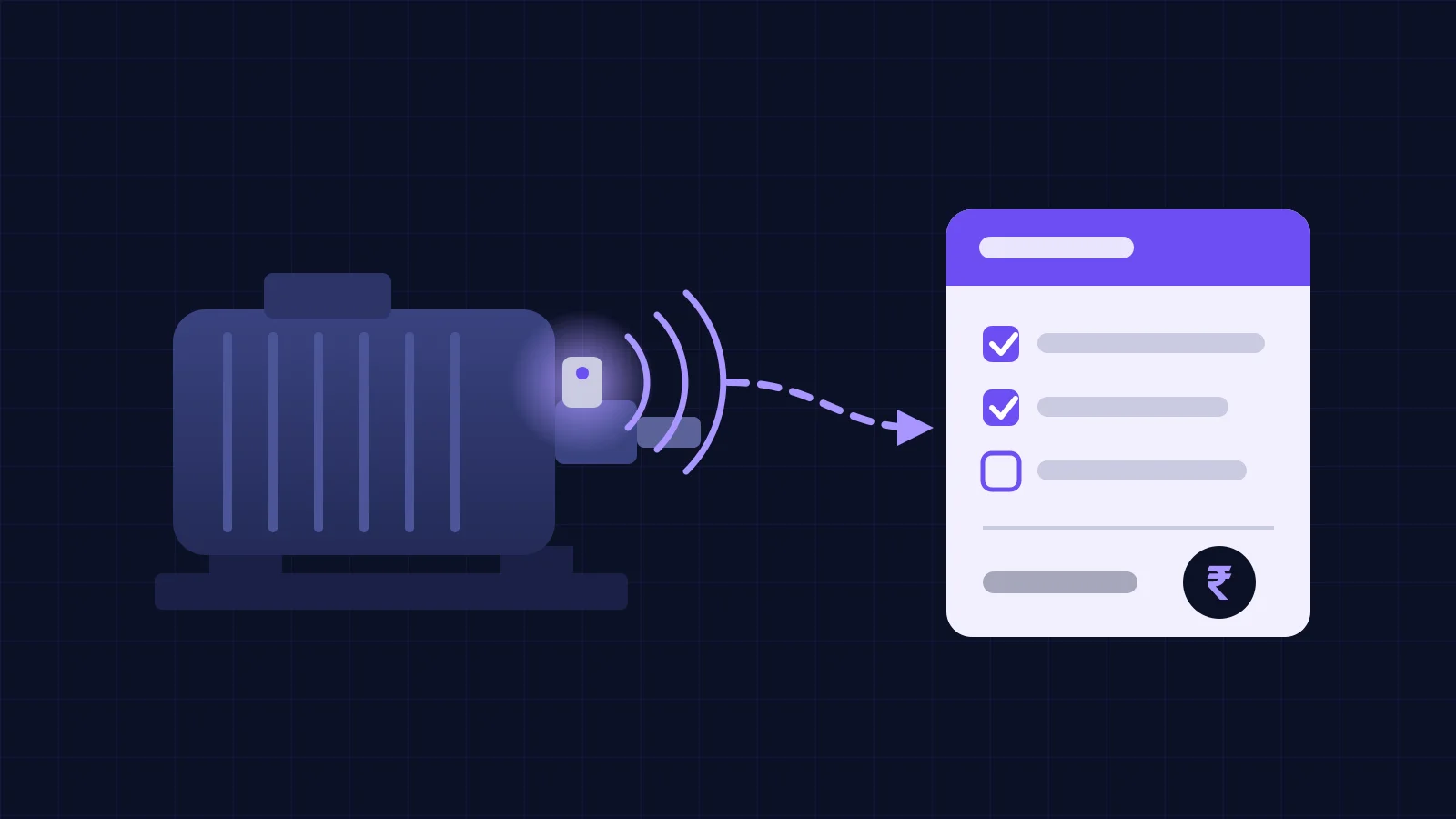
- Edge processing filters and pre-analyzes the signal near the sensor, so only meaningful changes get sent upstream instead of a continuous firehose of raw readings.
- Machine learning models trained on historical failure data learn what a developing fault actually looks like for your specific equipment, rather than relying on generic fixed thresholds.
- The best systems explain why an alert fired: which frequency band moved, and what fault signature it matches. That way an engineer can plan the right repair instead of just knowing "something changed."
Getting Started
You don't need to instrument an entire plant on day one. Most teams start with vibration sensors on the handful of assets where an unplanned failure would actually hurt (a main drive, a critical compressor, a kiln fan) and expand from there once the data proves itself. The sensor side of this is best scoped with an engineer. We help you pick the assets worth monitoring first, feeding that signal into Vexron for the analysis and alerting. Our page on vibration monitoring systems lists the parts of a setup and the machines it covers.
Want to see this on your own equipment?
Talk to us about which assets are worth monitoring first.
Talk to our team