

Nobody starts with an ERP system. Every manufacturer we've worked with started on spreadsheets, and for a while that's exactly the right call. The question isn't whether spreadsheets are bad. It's whether you've quietly crossed the point where they're costing you more than an ERP system would.
What Spreadsheets Are Actually Good At
For a single plant with a small team, a spreadsheet is fast, free, and flexible. Nobody has to wait on IT to add a column. If that describes your operation today, switching to an ERP system early would just add process for its own sake.
Where They Start Breaking
- No single source of truth. Once more than one person edits the same file, you get version conflicts. Someone's always working off yesterday's numbers.
- Inventory drifts from reality. Stock counts get updated manually and fall behind what's actually on the floor, so nobody trusts the sheet enough to act on it without calling someone first.
- Month-end close takes longer every quarter. Reconciling production, inventory and finance across separate files is manual work that scales badly as the business grows.
- No audit trail. When a number looks wrong, there's no record of who changed what, or when.
The Real Trigger Points
In practice, the switch usually gets forced by one of a few specific moments, not a gradual realisation:
- You open a second plant or warehouse and can't get a consolidated view without emailing files back and forth. Here is what a second site needs from an ERP.
- A customer or auditor asks a question your spreadsheets can't answer without a day of manual digging.
- Someone leaves, and their spreadsheet turns out to be the only place a critical process actually lived.
What ERP Actually Fixes
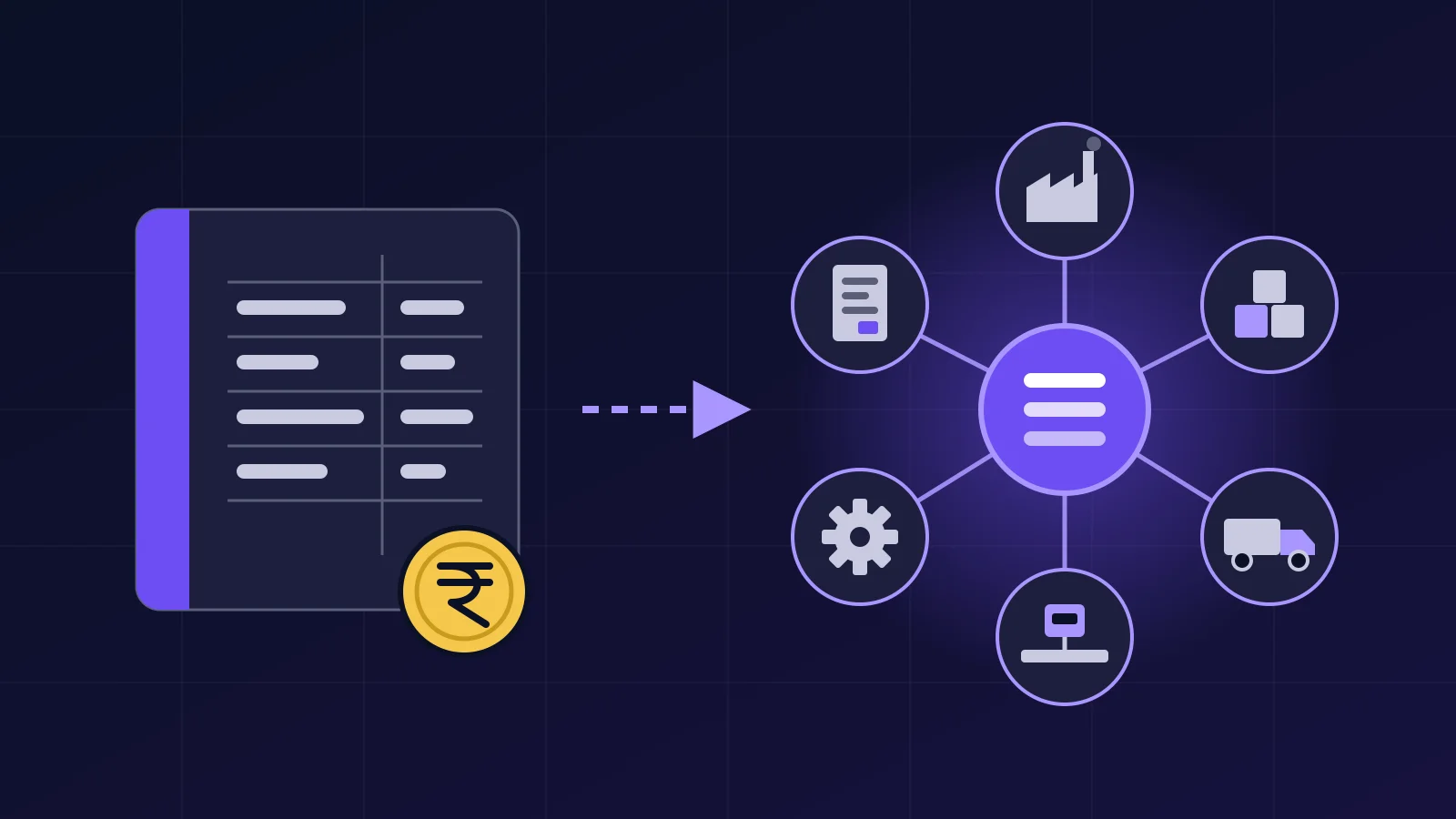
A proper ERP system replaces the pile of disconnected files with one system where production, inventory, finance and HR all read from the same numbers in real time. The question "what's our stock right now?" then has one answer, not five people's best guess. Our ZapNexa overview shows what that one system covers, from procurement to payroll.
Migrating Without the Pain
You don't have to replace everything on day one. Most manufacturers migrate one module at a time, usually inventory or finance first, since that's where spreadsheet drift hurts most. They prove it against real data, then extend from there. Our ERP rollout checklist sets out that order step by step. ZapNexa is built for exactly this staged approach: steel, manufacturing, mining and power operations that need to keep running while they migrate off spreadsheets, not stop for a big-bang cutover.
Not sure where to start?
See how ZapNexa is built for manufacturers moving off spreadsheets.
Explore ZapNexa