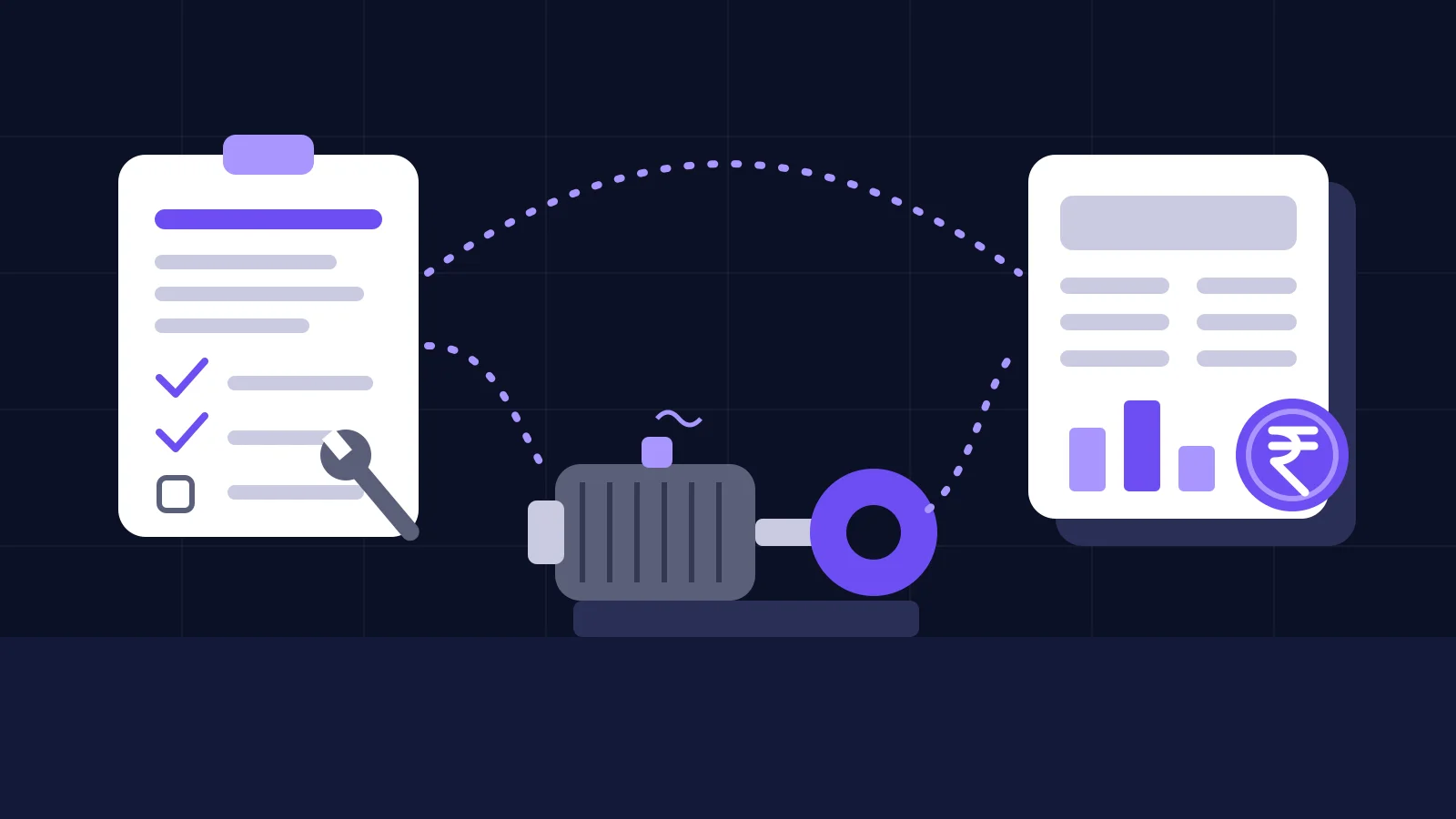



Predictive maintenance means servicing a machine when its condition says it needs it. Not when the calendar says so, and not after it breaks. Sensors measure things like vibration, temperature and motor current. Software watches those readings for the slow changes that come before a failure. That gives the maintenance team time to plan the repair into a shutdown, instead of losing a shift to a breakdown.

This guide explains what predictive maintenance is, where industrial IoT fits in, and how to decide if it is worth doing on your machines. Each section links to a longer post on that topic.
What Predictive Maintenance Is, and What It Is Not
There are three common ways to look after a machine:
- Reactive maintenance: run it until it fails, then fix it. This is fine for a cheap part with a spare on the shelf. It is very costly for a kiln drive or an ID fan.
- Preventive maintenance: service on a fixed schedule, such as every few thousand running hours. It is simple to plan. But healthy parts often get changed early, and a fault that starts between two services is missed.
- Predictive maintenance: service when a measured change shows that a fault is developing.
Predictive maintenance does not replace the other two. Most plants use all three and choose per machine. Our guide to predictive vs. preventive maintenance shows how to decide which asset gets which approach.
It also cannot tell you the exact hour a part will fail. What it tells you is that a fault has started, and how fast it is getting worse. In most cases that is enough to order the part and book the work.
Where Industrial IoT Comes In
Predictive maintenance needs frequent readings from many machines. Industrial IoT (IIoT) is the set of devices and software that collects them. A typical setup has three layers:
- Sensors on the machine: vibration sensors on bearing housings, plus temperature and motor current. Our sensor buyer's guide covers which type to pick for which machine.
- An edge device near the machine: it collects the readings and does the first round of processing. It can also read data the plant already has, from PLCs and SCADA, over protocols such as Modbus and OPC-UA.
- Software that keeps the history: it compares each reading with limits and with the machine's own trend, and sends an alert when something changes.
Old machines are not a barrier. Most sensors are clamped, glued or stud-mounted onto the existing bearing housing. See our guide to retrofitting IoT sensors on 20-year-old machines.
What the Sensors Actually Catch
Most faults in rotating machines change the way the machine vibrates well before they stop it. A worn bearing, a misaligned coupling and an unbalanced fan each leave a different pattern in the signal. Vibration analysis 101 explains how sensors pick these up.
To judge whether a reading is normal, many plants use the zone limits in ISO 10816-3, now published as ISO 20816-3. The limits depend on the size of the machine and how it is mounted. Our post on ISO 10816 vibration thresholds explains the four zones. The free vibration threshold lookup checks a single reading for you.
Temperature and current fill in the rest. A bearing running hotter than usual, or a motor drawing more current at the same load, are both early signs worth a look.
From Alert to Repair
An alert on its own fixes nothing. Someone has to check it, raise a work order, get the part and book the shutdown. If one of those steps has no owner, alerts pile up and people stop trusting them. Our post on condition monitoring and ERP integration walks through each hand-off, from the first alarm to a closed and costed work order.
Is It Worth the Money?
It depends on what a stop costs you. Start with the cost of one unplanned stop on your most important machines. Count lost margin, idle crew, restart energy, scrap, repair and any penalties. Our worked example of the cost of unplanned downtime does this line by line in rupees. The downtime cost calculator runs the same numbers for your own plant.
Then set that against the cost of sensors, software and your team's time. Our guide on how to calculate the ROI of predictive maintenance shows where the payback really comes from.
Sometimes the answer is no. If a machine is cheap, has a spare in the store and stopping it costs little, monitoring it is not worth it. Let it run to failure and spend the money on the machines that stop the line.
How to Start
Start small. Pick a handful of critical machines where one stop costs the most. These are often the ones that halt the whole line when they fail. Monitor those first, check that the alerts are right, and only then add more machines.
Many pilots fail because they were scoped badly: too many machines, no one who owns the alerts, or no agreed way to measure success. Read why most predictive maintenance pilots fail before you start.
For a full plan on one process line, see predictive maintenance in a cement plant. It covers what to watch on the kiln, the vertical roller mill and the ID fans, and how to rank machines by kiln hours lost.
How Vexron Does This
Vexron is our predictive maintenance platform. Its edge software reads existing PLCs over Modbus, Siemens S7, OPC-UA and EtherNet/IP. It works out vibration measures such as RMS velocity, crest factor and kurtosis at the edge, and grades them against ISO 10816 zones. If the plant network drops, it stores more than 100,000 readings locally and sends them once the link is back. It also puts a rupee figure on downtime, so you can see what each stop cost.
Start with the cost of a stop
Work out what one hour of downtime costs on your line. Then see how Vexron watches the machines behind it.
Downtime cost calculatorExplore Vexron