

Indian manufacturers with aggregate turnover above ₹5 crore must report each B2B invoice to the Invoice Registration Portal (IRP) and get an IRN and signed QR code. From 1 April 2025, those at ₹10 crore and above must report within 30 days. A good ERP does both with no portal typing.
The rules look simple. The pain comes from the edge cases: a rejected invoice, a late report, a wrong GSTIN, an invoice you need to undo. This post lists the rules with sources, then gives you eight things to test in any ERP before you trust it with your compliance.
Does my plant have to e-invoice?
Yes, if your aggregate turnover is above ₹5 crore. The limit has applied since 1 August 2023 under Notification No. 10/2023 (Central Tax). It covers B2B invoices, debit notes and credit notes, and exports. It does not cover sales to consumers.
Four numbers matter. Rules change, so check each against the official notice before you act.
| Rule | Who it covers | What it says |
|---|---|---|
| E-invoicing is mandatory | Aggregate turnover above ₹5 crore | Report B2B invoices to the IRP, get an IRN and QR code |
| 30-day reporting limit | Aggregate turnover ₹10 crore and above | From 1 April 2025, no reporting after 30 days from the document date (GSTN advisory, 2024) |
| IRN cancellation | Any e-invoicing taxpayer | Cancel on the IRP within 24 hours, in full |
| E-way bill | Goods consignment above ₹50,000 | Needed for movement of goods, on the e-way bill portal |
The IRP itself is run at the e-invoice portal. Treat the portal and the notifications as the final word, not this table.
What happens to one invoice from start to return?
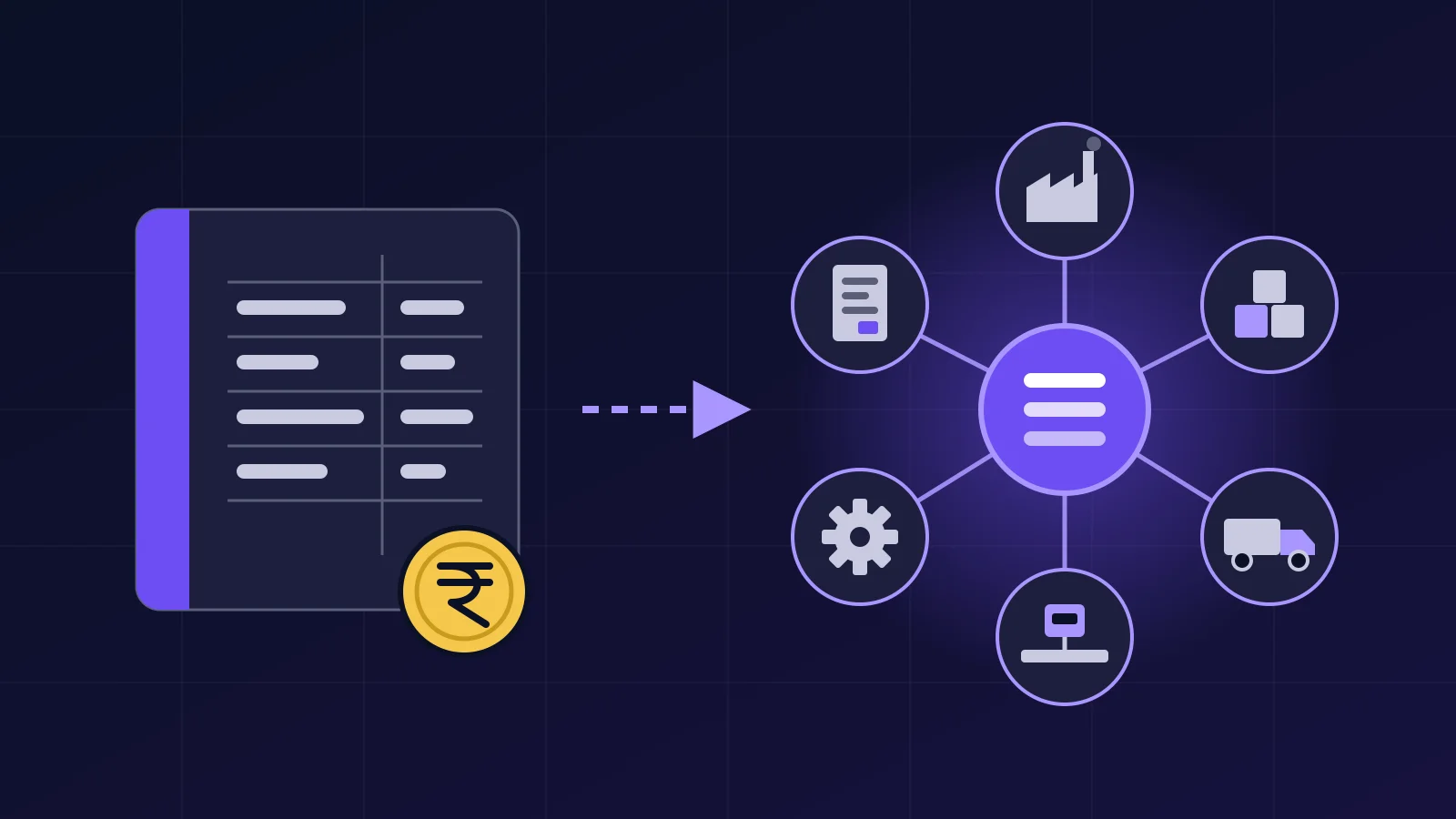
One invoice passes five hand-offs: check, report, store the IRN, make the e-way bill if goods move, then feed the return. The ERP should run every step. A person should only step in when something is rejected.
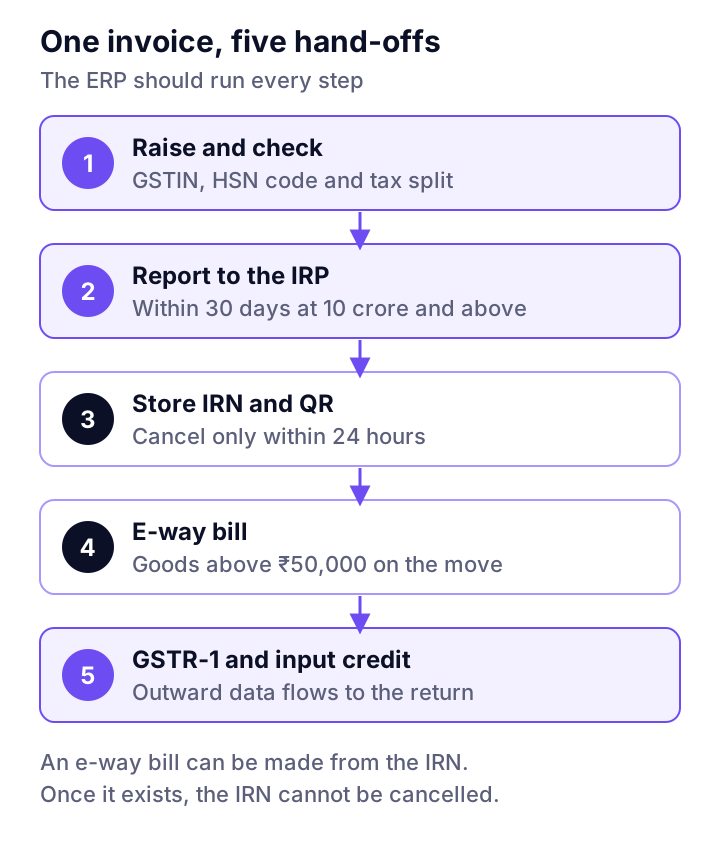
Step 1 is where most rejections start. The IRP checks the invoice against a fixed schema. A wrong GSTIN, a missing HSN code or a tax split that does not add up sends the invoice back. An ERP that checks these before it calls the portal saves a loop of fixes.
What should the ERP do when something goes wrong?
It should queue, warn and lock. Most compliance trouble comes from the unhappy path, not from the first invoice of the month. Three cases show up on every plant.
- The portal is down or slow. The invoice must wait in a retry queue with a status, not vanish. Dispatch should not be stuck on a manual re-entry.
- The 30-day limit is close. For a taxpayer at ₹10 crore or more, a late invoice cannot be reported at all. The ERP should list unreported invoices by age, so the oldest one is never a surprise.
- An invoice is wrong after the IRN is issued. Within 24 hours you can cancel it in full. After that, a credit note is the route. If an e-way bill was already made, the IRN will not cancel. The ERP should show this before a user tries.
Where does the e-way bill fit?
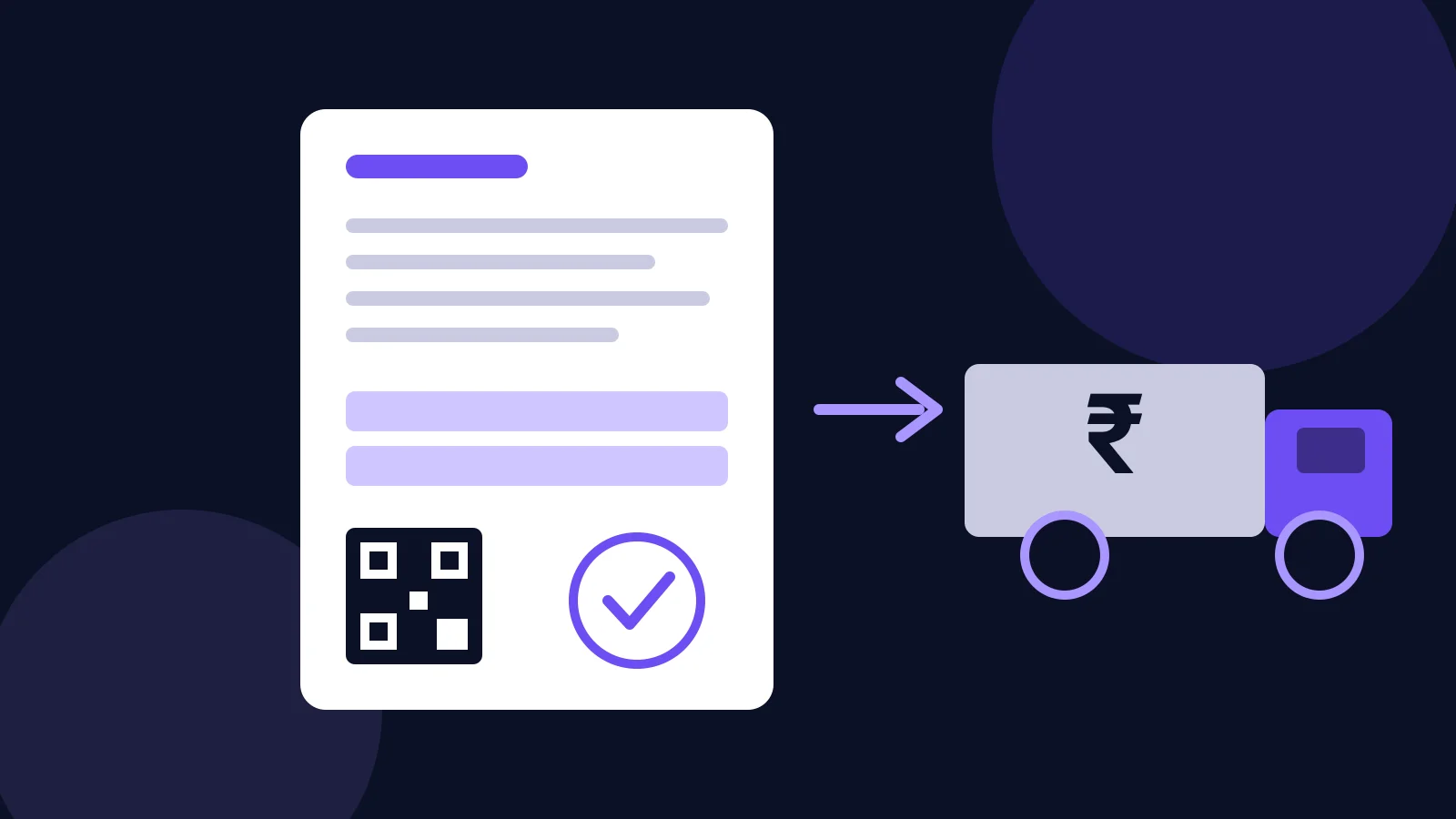
The e-way bill follows the invoice. When goods above ₹50,000 move, the e-way bill should be made from the same invoice data, with vehicle and transporter details added. The ERP should keep the invoice, IRN and e-way bill linked on one record.
Plants with their own gate have one more input. The dispatched quantity on the invoice should match the weighbridge ticket. If you already automate that, see how weighbridge integration removes manual entry. The weight on the ticket and the quantity on the invoice then come from one source.
A plant with units in several states has several GSTINs. Each one files its own e-invoices. That matters for multi-plant ERP set-ups, where one head office sees many registrations.
Eight things to test before you trust an ERP
Ask for a live demo of each point. A slide is not proof.
| # | Test | Pass looks like |
|---|---|---|
| 1 | Pre-check | A bad GSTIN or missing HSN code is caught before the portal call |
| 2 | IRN and QR capture | Both are saved on the invoice and print on the PDF |
| 3 | Portal outage | Invoices queue with a visible status and retry |
| 4 | 30-day alert | A list of unreported invoices, sorted by age |
| 5 | Cancel rule | The 24-hour window is shown, and blocked once an e-way bill exists |
| 6 | Credit note path | A credit note links back to the original IRN |
| 7 | E-way bill from invoice | Vehicle and transporter details are added, nothing re-typed |
| 8 | Return feed | Outward supplies reach GSTR-1 with no export and fix |
Score each as pass, partial or fail. Two or more fails on points 3 to 5 is a warning, because those are the cases that cost money when they go wrong.
Why should this sit inside the ERP, not beside it?
Because an add-on tool does not know your stock, production or dispatch. It sees only the invoice. You then keep two records and reconcile them by hand. When invoicing sits in the same system as sales, inventory and finance, the IRN is a by-product of dispatch.
This is also one reason manufacturers outgrow spreadsheets. A spreadsheet cannot call the portal, and it cannot warn you that an invoice is 28 days old. If you are moving off an old system, add these eight tests to your ERP migration checklist. Then check that the quote includes the portal connection, as our guide to ERP software cost in India explains.
Where does ZapNexa fit?
ZapNexa ERP has a finance module with GST-ready invoicing, built for Indian plants. Use the eight tests above on it, as you would on any ERP. Ask us to run each one in a demo and judge the result yourself.
If you are weighing it against an accounting-first tool, our ZapNexa vs Tally comparison shows where each one fits. For the general question, see the signs a plant has outgrown Tally.
Frequently asked questions
Who has to issue GST e-invoices?
A business whose aggregate annual turnover is above ₹5 crore must e-invoice its B2B supplies, since 1 August 2023 under Notification No. 10/2023 (Central Tax). Check your own turnover history with your CA, because the test can look at earlier years too. E-invoicing is not for sales to consumers.
What is the 30-day rule for e-invoices?
From 1 April 2025, a taxpayer with aggregate turnover of ₹10 crore or more cannot report an invoice, credit note or debit note to the IRP more than 30 days after its document date. The portal rejects late reports. Your ERP should warn you before the deadline.
Can I cancel an e-invoice after it has an IRN?
Only within 24 hours of IRN generation, and only in full. After that, issue a credit note and correct it in your GST return. If an e-way bill already exists for the IRN, the portal will not cancel the IRN.